B-School Interviews: What you should do in the first 90 seconds

Updated: Apr 28
People judge you within the first 90 seconds of your interview. Its not something i am saying, its the truth - or probably somewhere really close to it. Bear with me, as i try and offload a lot of what i want to say via this post. The problem with most B-school interviews happen not because the candidate has not prepared but because he cannot set the correct precedents in the order he would most had liked to.
Now, what does it mean? Imagine being from the BFSI industry and not knowing the full form for it. This seemingly small oversight on your end can break your interview. As has happened with one of the interviewees.
Now, the question that folks ask will ask - This is not tell me about yourself. In the literal sense, maybe yes, but tell me about yourself goes much beyond the generic questions that B-School preparation guide books tell us about. Its not about the actual question but more so, the focus is on the conversational aspect of it. Unless you are able to talk about yourself, your strengths and weaknesses, your job history and likes / dislikes with an interviewer, as well as you do with your friend - maybe you are not prepared for the first 90 seconds of the interview.
And this is where I want to begin this new series of blog posts - It will feature small microcosmic moments that determine the रुख (direction) of the interview.
The First 90 seconds
Picture yourself standing between the door of the interview and the panelist sitting on the opposite side of the room - the person who will decide whether you are worth entering the prestigious hallways of a B-school. Between you pushing open the door and sitting down in the table to the first answer you give - are the first 90 seconds of the interview. It could be a little longer than 90 seconds but you get the gist. We are trying to optimize these 90 seconds and why :
Research shows that the person forms an unconscious opinion of you as soon as 30 seconds
My interactions with people and their conversations (not to be disclosed) have shown people judge each other as soon as the first words leave their mouth.
The Problem
The issue with people is that even though people anticipate questions and form model answers, many focus only on the verbal aspect of it. An interviewer is looking at 2 other factors - the paraverbal aspect of communication. These could be slight use of hand gestures, pause, tonality and smile of the interviewee. Lets start with the structure of the answer and then we will move to the non verbal cues you should definitely focus on.
Chronology
Start in a chronological fashion -
"My name .... I graduated from ... I worked on ...."
in order to build a mental picture of your journey in the interviewer's mind. Chronological ordering works because this is the basis of storytelling and as I have learnt, this is the best format of engaging a person since the stone age when humans used to etch their victories in stone for posterity.
Causality
Causality is the 2nd step of structuring. Once you have formatted your answers in this fashion, it answers the 'WHAT' aspect of your journey. Causality meaning reason, answers why - which is the most important question an interviewer wants to understand about you. The reason is simple - MBA has become a shortcut for moving up the corporate ladder - they do not want you to become a leader when your vision is blurred and your mission seems missing !
Adding onto the previous structure - the refined version becomes
"My name is .... I was interested in <Reason>... so I took up .... and graduated in .... I joined .... as it has <Reason>.... I am now pursuing an MBA as it <Reason>.... I am interested to join this program as it aligns with my ambition of <Reason>...."
STAR Structure
A must have weapon in your answering arsenal - the STAR technique fixes the structure of your answer. It is used to answer specific segment of the TMYA - the projects and achievements part. How?
When you are talking about yourself you are essentially making a sales pitch where you are the product. You have to proactively tell them about projects and your achievements.
This is done by a simple 4 step method - can be used sparsely or comprehensively depending on the specificity of the question.
A general idea of presentation is this and there is nothing wrong with it.
"Worked on <Project> .... with the aim to achieve <Goal>.... in <Timeline>"
But,
the framing usually taught and practised sounds something like this
"The firm was facing ....<Problem> and I took the initiative of ...<Organizing / Coordinating> which led to the <Project>.... . In a <timeframe> we created business value worth of <Dollars / Time Savings / Personnel Savings / Tech Advancement> et."
Paraverbal Cues:
When writing, if we want to emphasize something we make it bold. In a similar fashion, while speaking focus on specific parts of the sentence by enunciating it strongly either slowly or with a pause. This will help the interviewer remember specific parts of the interview more strongly than others - which in turn sets him up to ask questions along your comfort lines.
Another way of portraying yourself strongly, is to look the other person in the eye, nod and smile and say -"Good Morning / Afternoon". A lot of people miss this due to nervousness but this simple gesture build good reputation before you have even started.
Why these 90 seconds only:
Psychological cues are damaging - conscious rational choices can be explained but feelings / vibes cannot be. When you know someone from a long time you ignore these small cues but in an interview when you have 30 minutes or an hour to impress someone, a large portion of decision making shifts to System 1 which is why "well groomed attire & accessories and a smile" will take you farther than a well rehearsed speech.
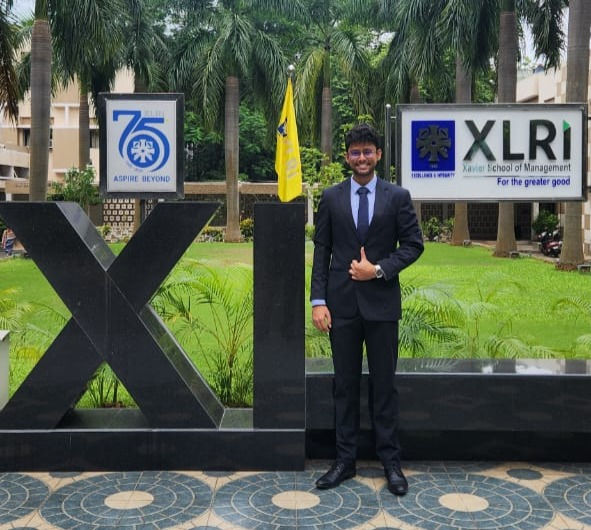
I found my way to XLRI after 2 years, hope you find yours too. Hope this helps and best of luck to all!
If you are looking for any specific guidance, check out my services section

Comments